
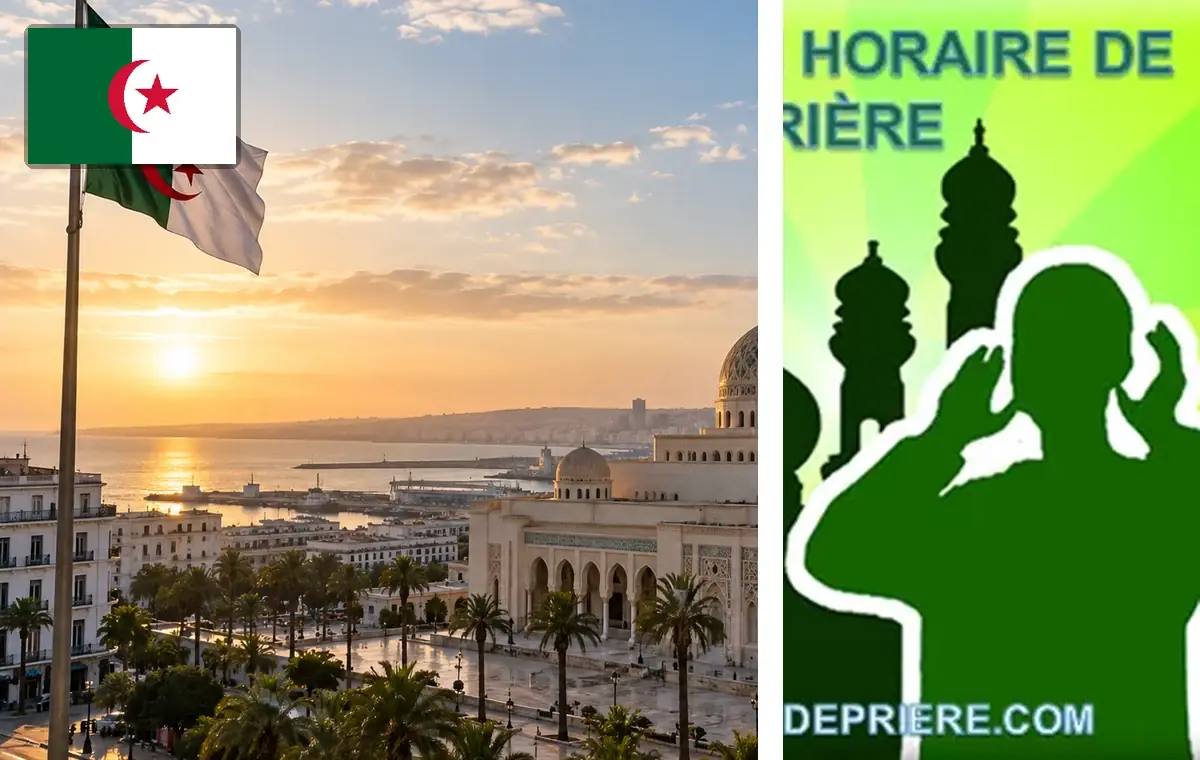
In Tlemcen, prayer times show each day when the five Muslim prayers, Fajr, Dhuhr, Asr, Maghrib and Isha, begin, calculated from the sun's position above the horizon. This former capital in north-western Algeria, close to the Moroccan border, rises on a plateau at the foot of the Tlemcen mountains. Its altitude, a Mediterranean climate with cool winters and a rich Andalusian and Almoravid heritage give the city a distinctive rhythm in which the seasons are easy to read in the length of the days.
Tlemcen, historic capital of north-west Algeria
Tlemcen occupies a high site backed by the mountains that bear its name, with open views towards the plain. As the capital of the Zianid dynasty it kept many monuments: the El Mechouar citadel, the remains of the fortress of Mansourah and its almost intact minaret. Its Andalusian legacy lives on in music, embroidery and crafts. This past as a great cultural hub between the Maghreb and al-Andalus still shapes the identity of the city.
Altitude, climate and daylight
Several hundred metres above sea level, Tlemcen has hot, dry summers and cooler, sometimes cold winters, with rain in autumn and winter. Its middle latitude gives clearly longer days in summer than in winter, which moves Fajr and Maghrib noticeably from month to month. Algeria keeps the same legal time all year, so only the sun's course changes the timetable and no clock change interrupts the pattern. In spring the nearby hillsides turn green after the winter rains.
The Great Mosque and places of worship
The Great Mosque of Tlemcen, built in the Almoravid period, is among the finest examples of religious architecture in the Maghreb, with its ornate dome and finely decorated ceiling. Other old mosques, such as those linked to Sidi Bou Madyan, a Sufi saint venerated across the region, also draw worshippers and visitors. Friday prayer brings together residents of the old town and of newer suburbs alike. Its decoration reflects the craftsmanship of the Almoravid period.
Ramadan and religious festivals in Tlemcen
During Ramadan, Tlemcen stands out for lively evenings, family tables and traditional pastries. The month brings night gatherings where Andalusian music and religious chants are often heard. Both Eids are occasions to meet relatives, with visits and shared meals. Locals also enjoy outings to the heights of Lalla Setti, which overlook the city and offer a broad panorama. Many families prepare traditional dishes and sweets, and the markets fill with shoppers before Eid, including visitors from nearby villages.
Tlemcen prayer times: Frequently asked questions
Do prayer times in Tlemcen vary a lot between seasons?
Yes, clearly but steadily. Days are longer in summer and shorter in winter, which gradually moves Fajr and Maghrib from one month to the next.
Does Algeria change its clocks for summer?
No, Algeria keeps the same legal time all year. Prayer times in Tlemcen therefore shift only with the seasons, without any jump caused by daylight saving time.
What is the best-known mosque in Tlemcen?
The Great Mosque, dating from the Almoravid era, is the most famous. It is admired for its architecture and decoration and remains an active place of prayer in the heart of the old town.
Further reading
- IslamicFinder : Today's prayer times for Tlemcen, calculated for north-west Algeria (this site is in English).