
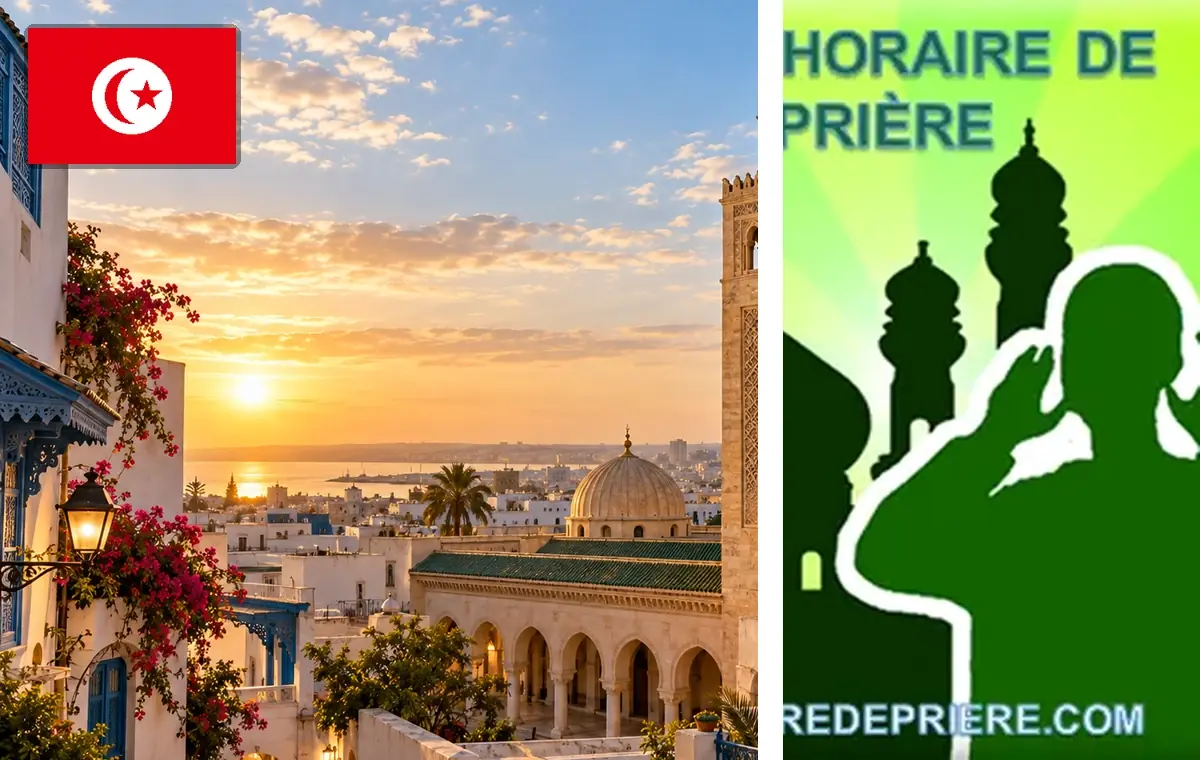
In Sfax, prayer times set the five daily Muslim prayers, Fajr, Dhuhr, Asr, Maghrib and Isha, according to the position of the sun above the city. As Tunisia's second-largest urban area, standing on the Gulf of Gabes, Sfax has shorter days in winter and longer ones in summer, under a dry Mediterranean climate. Legal time stays unchanged throughout the year, with no seasonal clock shift, giving residents of the old medina and of the modern districts alike a simple and steady frame for the daily schedule.
Sfax on the Gulf of Gabes: seasons and day length
At roughly thirty-five degrees north, Sfax sees daylight stretch from a little under ten hours in midwinter to more than fourteen at the height of summer. Dawn therefore comes early in the warm months and noticeably later in winter, while Maghrib moves along the same curve. The swing is moderate compared with northern Europe, yet it remains easy to notice in everyday life and shapes how working days, school hours and family evenings are arranged across the year.
Dry Mediterranean climate and sea breezes
The city enjoys a Mediterranean climate leaning towards aridity: hot, dry summers and mild, fairly dry winters. Skies are usually clear, so the glow of dawn and dusk is easy to follow from the seafront or from rooftop terraces. Breezes from the open sea soften the summer afternoons around Dhuhr and Asr, a time when many shopkeepers and workers take a shaded break before returning to their activity once the strongest heat has passed.
The Great Mosque and the medina of Sfax
The historic heart of Sfax is a walled medina whose lanes shelter souks, craft workshops and several places of worship. The Great Mosque, founded in the Middle Ages, stands at its centre and reflects the long religious life of the city. From this old core, neighbourhood mosques mark the day with the call to prayer, and Friday brings residents together in large numbers for the congregational prayer before they return to work or to their families.
Ramadan and festivals in Sfax
During Ramadan, Sfax adopts a different rhythm: shops open later in the morning, streets empty as sunset approaches, and cafes and markets fill again after the fast is broken. The city is well known across Tunisia for its cooking and pastries, which feature prominently on festive tables in the evening. At Eid, families gather, prayers are held in the larger mosques and on public squares, and the exchange of visits carries on for several days.
Sfax prayer times: Frequently asked questions
Do prayer times vary much through the year in Sfax?
Yes, noticeably. Day length moves from a little under ten hours in winter to more than fourteen in summer, which gradually shifts Fajr, Maghrib and Isha over the course of the months.
Does Sfax move to daylight saving time?
No. Tunisia keeps the same legal time all year, with no switch to summer time. Only the sun's movement changes prayer times from one season to the next.
Which daily prayers are observed in Sfax?
As everywhere in the Muslim world, there are five: Fajr at dawn, Dhuhr at midday, Asr in the afternoon, Maghrib at sunset and Isha once night has fallen.
Further reading
- IslamicFinder : IslamicFinder's English-language page for Sfax, with the day's prayer times and the qibla direction.