
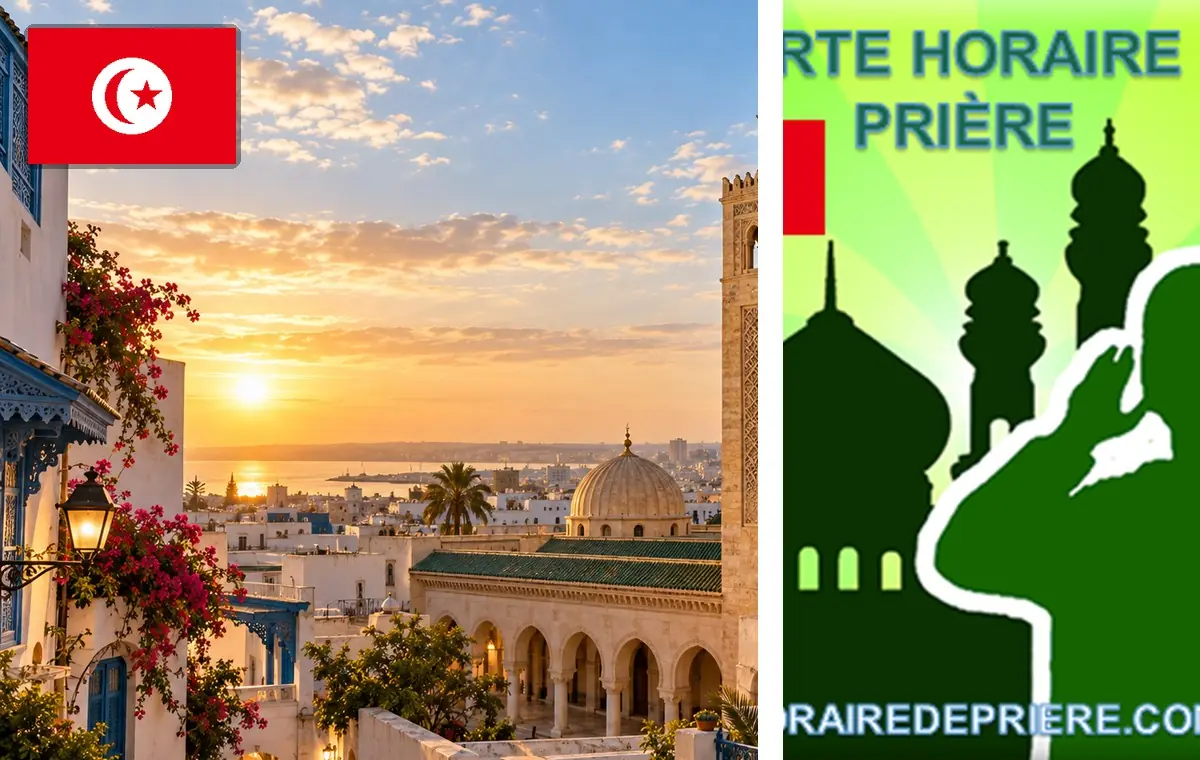
In Bizerte, prayer times mark the moments of the five daily prayers, Fajr, Dhuhr, Asr, Maghrib and Isha, each worked out from the position of the sun above the local horizon. The city lies on the Mediterranean coast of northern Tunisia, where a channel links the open sea to Lake Bizerte. This coastal setting gives a wide view toward the western horizon at sunset, while clocks follow the single Tunisian time zone, which does not change with the seasons. These markers shape the daily routine of residents, shops and schools across the city.
Bizerte, a northern port between sea and lake
Bizerte is often described as the northernmost city on the African continent, with Cape Blanc and Ras Angela close by. Its bay opening onto the Mediterranean, its old harbour lined with colourful houses and its kasbah give the town a strongly maritime character. For worshippers, the northern position means a clear sea horizon at dusk, just as Maghrib approaches, and daylight hours that shift noticeably between winter and summer, which is why the schedule keeps moving through the year.
Seasons, latitude and the length of the day
Sitting at roughly thirty-seven degrees north, Bizerte has long, bright summers and short, mild, damp winters. In midsummer Fajr comes very early and Isha late in the evening, so the night feels brief. In winter the opposite happens: daylight narrows and the afternoon prayers draw closer to nightfall. This steady drift explains why the schedule moves a little every week through the year, even though the clock itself never changes. Anyone planning a day outdoors, a trip or a visit can see at a glance how much daylight remains.
The Tunisian time zone and daily routines
Tunisia keeps one time zone, an hour ahead of universal time, and does not move its clocks for summer. In Bizerte the gap between the clock and the sun therefore stays stable all year, and only the sun's changing path alters the moments of prayer. Shops in the centre, offices and schools plan their day around these markers, and many people arrange midday or late afternoon breaks around the call to prayer, a familiar part of the rhythm of the city.
Ramadan and Eid in Bizerte
During Ramadan the town changes pace. Streets empty as Maghrib nears, then cafés, squares and the seafront promenade come alive again once the fast is broken and Isha is prayed. Families gather around tables filled with Tunisian specialities, and evenings often stretch late into the night. At Eid, residents attend the morning prayer, visit relatives and share pastries and sweets, while the old harbour fills with visitors and local families enjoying a calm festive atmosphere after the prayer.
Bizerte prayer times: Frequently asked questions
Why do prayer times change every day in Bizerte?
Prayer moments follow the sun's position, which shifts daily with the seasons. In Bizerte, Fajr and Isha vary most between summer and winter, while the Tunisian time zone stays exactly the same all year.
Does Bizerte change its clocks in summer?
No. Tunisia does not apply a seasonal clock change, so Bizerte keeps the same time all year. Only the prayer moments drift gradually as the sun's path and the length of daylight change.
Are prayer times in Bizerte the same as in Tunis?
They are very close, since the two cities are only about sixty kilometres apart. A difference of a few minutes can exist, because Tunis lies slightly further east and sees the sun rise a little earlier.
Further reading
- IslamicFinder : The Bizerte page with today's prayer moments and the monthly calendar, in English.