
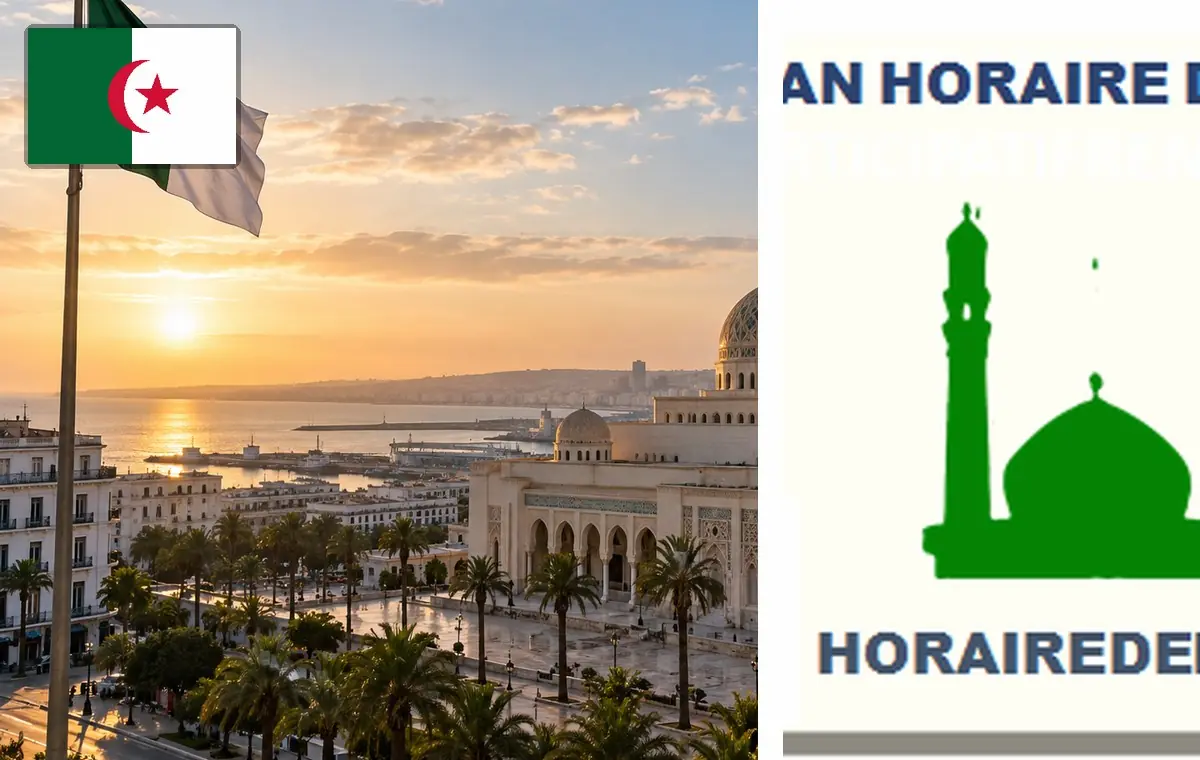
In Oran, prayer times set out the five daily prayers, Fajr, Dhuhr, Asr, Maghrib and Isha, each calculated from the path of the sun above the bay. A Mediterranean port in western Algeria, the city enjoys contrasting seasons, with long bright summers and milder winters, so dawn and dusk slide steadily across the months. Algeria keeps a single official time across its whole territory, which means Oran shares its daily reference points with the rest of the country, even though its western position nudges each prayer slightly later than in the east.
Oran between sea and mountain through the seasons
Oran stretches along a bay open to the Mediterranean, backed by the Murdjadjo massif. At a latitude near thirty-five degrees north, summers are bright with long evenings, while winters are short yet clear. Fajr often rises over a calm sea, and Maghrib paints the port and the hills above the city in warm colours. This regular alternation, without extremes, makes it easy to sense the passage from one prayer to the next during the day.
Mosques and religious heritage in Oran
Religious life in Oran draws on several well-known buildings, among them the Pasha Mosque, a legacy of the Ottoman era, and the great Abdelhamid Ibn Badis Mosque, one of the most imposing places of worship in western Algeria. Older districts such as Sidi El Houari shelter smaller mosques where the call to prayer echoes between the alleys. On Fridays, worshippers gather in large numbers for the congregational midday prayer. Visitors exploring the old town often stop at these mosques as part of their walk through the city's layered history.
Everyday rhythm from the seafront to the old quarters
Oran is a lively city, known for late evenings, raï music and long walks along the waterfront. Many residents tie Dhuhr to the midday break and then enjoy the afternoon until Asr, when the summer heat begins to ease. After Maghrib, shopping streets and squares fill with families. Students, dockworkers, shopkeepers and office staff all arrange their prayers around their own schedules, in a pace that feels relaxed and animated at once.
Ramadan and Eid in Oran
During Ramadan Oran transforms: markets crowd in the late afternoon, families prepare chorba soup, home-baked bread and pastries, and the city falls quiet just before the fast is broken at Maghrib. Evenings continue around the mosques for Tarawih, then in cafés and along the seafront. On Eid, visits to relatives, shared meals and traditional sweets set the tone for the day. Neighbourhood associations distribute meals to families in need, and sweet shops stay busy until the very last evening before the holiday begins.
Oran prayer times: Frequently asked questions
Which prayers structure the day in Oran?
Five prayers: Fajr at dawn, Dhuhr around midday, Asr in the afternoon, Maghrib at sunset and Isha after dark, each calculated from the position of the sun.
Why do prayer times in Oran differ from those in Algiers?
Oran lies further west, so the sun rises and sets a little later than in the east of the country. Each prayer therefore shifts slightly between cities despite the shared national clock.
Which mosques are well known in Oran?
The Pasha Mosque, dating from Ottoman times, and the great Abdelhamid Ibn Badis Mosque rank among the most famous. The city also has many neighbourhood mosques for daily and Friday prayers.
Further reading
- IslamicFinder : IslamicFinder page for Oran with the day's prayer times for the city (page in English).