
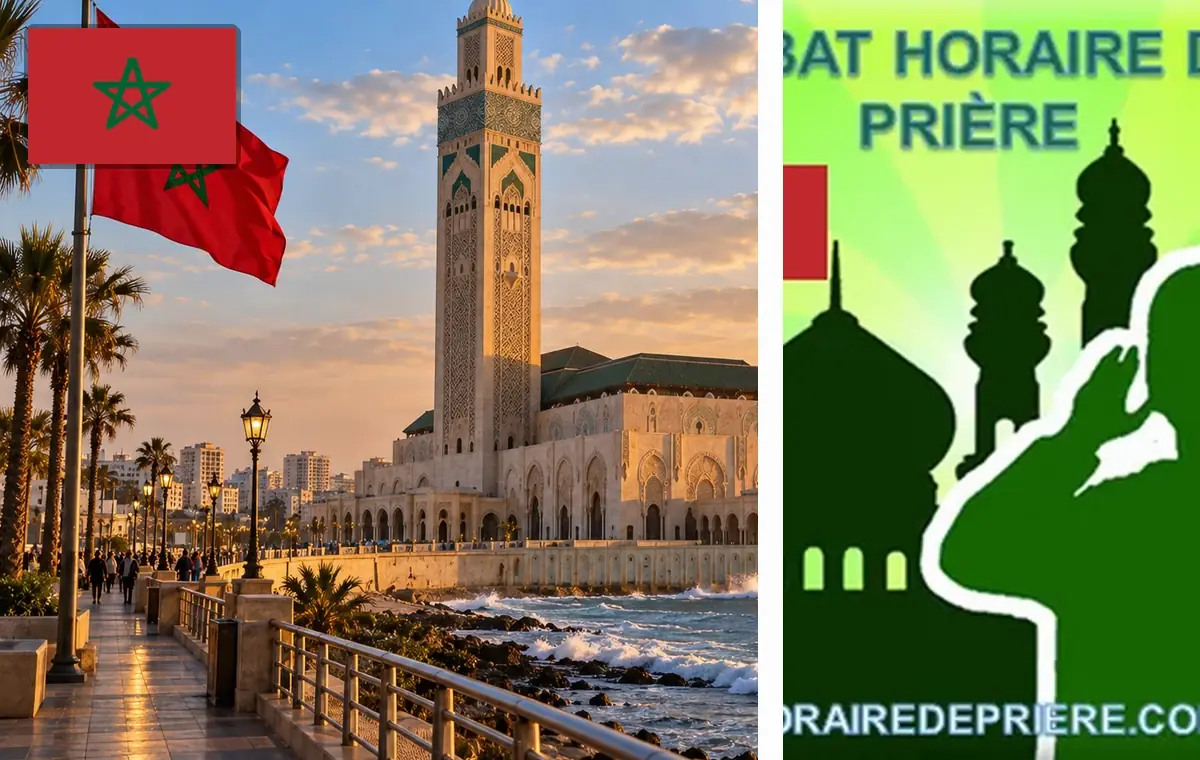
In Rabat, prayer times follow the five daily prayers, Fajr, Dhuhr, Asr, Maghrib and Isha, calculated from the path of the sun across the sky. Standing on Morocco's Atlantic coast, at the mouth of the Bouregreg river and facing the twin city of Salé, the capital lies at a temperate latitude of about thirty-four degrees north. Days stretch in summer and shorten in winter, while the ocean softens the climate. Official timetables for Rabat are issued by the religious authorities of the kingdom.
Rabat between ocean and river
Rabat spreads along the left bank of the Bouregreg, on the Atlantic shore, with Salé on the opposite bank. At roughly thirty-four degrees north, the city has longer days in summer than in winter, though without the extreme gaps found in northern countries. Fajr arrives early in the warm months while Maghrib slips toward the end of the evening. The sea breeze tempers the summer heat and makes late afternoons pleasant for outings.
Mosques and religious heritage in Rabat
The city holds several landmarks of Moroccan religious life. The Hassan Tower, an unfinished minaret from the Almohad era, rises above the esplanade beside the Mohammed V Mausoleum. The medina and the Kasbah of the Udayas keep older mosques, while large residential districts have neighbourhood mosques of their own. Friday prayer gathers residents, civil servants, students and diplomats, in a setting where the call to prayer marks the rhythm of the day.
Time zone and Ramadan in Rabat
Morocco keeps an advanced legal time for most of the year and returns to Greenwich Mean Time during the month of Ramadan, which shifts prayer times on residents' clocks. During the fast, streets empty shortly before Maghrib and then fill with families after the meal that breaks it. Lively evenings around the medina, the cafes and the mosques accompany the night prayers. Visitors arriving during that month should simply follow the clock displayed locally.
Travelling to Rabat and living at the capital's pace
Home to ministries, embassies and major universities, Rabat sees many commuters arrive daily from Salé, Temara or Casablanca. The tramway, the railway and Rabat-Salé airport make travel easier, and many people pray at stations or workplaces. Knowing when Dhuhr and Asr fall helps organise administrative appointments and the journeys of the day, especially for visitors who are new to the city. Rail links with Kenitra, Casablanca and Tangier also bring many day travellers into the city centre.
Rabat prayer times: Frequently asked questions
Do prayer times in Rabat change much with the seasons?
Yes, noticeably but moderately. The city sits at a temperate latitude, so dawn comes early and evening falls late in summer, with the reverse pattern in winter.
Who publishes the official prayer timetable in Rabat?
In Morocco, prayer times are set nationally by the ministry in charge of religious affairs and then applied in the mosques of Rabat and across the rest of the kingdom.
Does Ramadan change the clock in Rabat?
Morocco generally returns to Greenwich Mean Time during Ramadan before going back to its usual time afterwards. It is therefore wise to rely on the local clock of the moment.
Further reading
- IslamicFinder : Rabat page on IslamicFinder with today's prayer times for the Moroccan capital (page in English).