
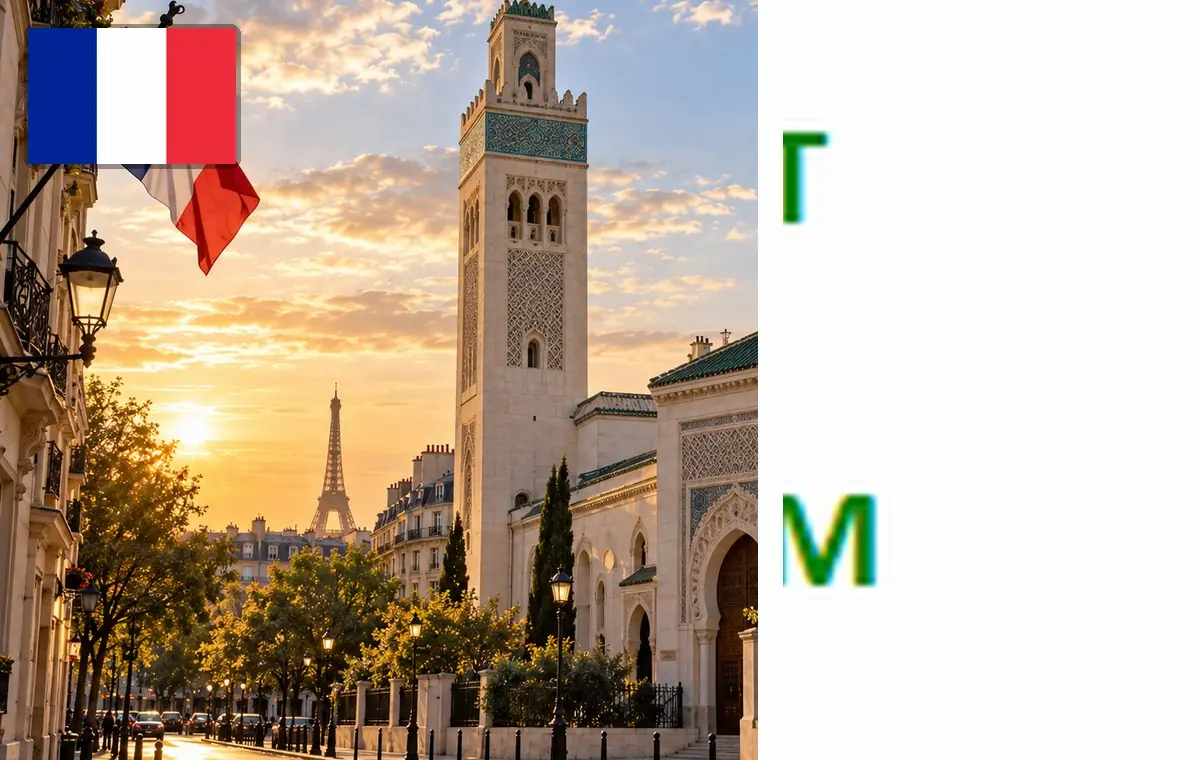
In France, interest free Islamic credit is a form of financing built without riba, the charge on borrowed money that Islamic finance rules out. Rather than lending cash at a rate, the provider buys an asset and resells it with a margin agreed at signing, or makes it available for a fixed rent under murabaha and ijara contracts. French law has no dedicated status for these structures, so they sit inside ordinary civil, banking and consumer rules. Supply is narrow and centres mainly on homes, cars and small business projects.
What riba means and how financing works without it
Riba is the gain drawn from lending money, whether the rate is fixed or variable. Islamic finance answers with risk sharing and a simple principle: every transaction must rest on a real asset or activity. Money is not treated as a commodity in itself. The provider earns from a sale, a rent or a share of results, and the customer knows the full cost from day one. Late fees that would work like interest are usually replaced by charitable donations or capped charges. Compliance boards review contracts to confirm that the structure respects these principles.
Murabaha, ijara and musharaka in French practice
Murabaha is the most common route: the provider acquires the item requested, then transfers it to the customer at a disclosed margin paid in fixed instalments. Ijara resembles a lease, with the asset made available for rent and ownership passing at the end. Musharaka, rarer, relies on shared ownership that the customer buys out gradually. In France these formulas mostly serve the purchase of a main home, a vehicle or professional equipment, and the sale contract or notarial deed spells out each stage of the operation.
French law, tax and borrower protection
No French statute reserves a regime for Islamic finance, yet some tax adjustments were introduced so that successive sales of one asset are not taxed twice. Consumer protection rules apply to offers aimed at individuals, including pre-contract information, a withdrawal period for certain credits and a clear statement of total cost. A firm acting on a regular basis needs the right authorisation. Before signing, it helps to compare the overall cost with a conventional loan and to read the clauses on penalties and early repayment carefully.
A limited market and the alternatives
Supply remains modest in France. A few specialised providers, cooperatives and community initiatives offer interest free structures, mostly for property or equipment, while most retail banks have no dedicated Islamic range. Many households therefore turn to savings, ethical crowdfunding, microcredit or family support. Each option has its own eligibility rules, costs and degree of compliance, which deserve careful reading. An independent adviser or a notary can help place a project within this landscape without committing the applicant in advance.
France interest free Islamic credit and financing: Frequently asked questions
Is interest free credit allowed in France?
Yes, French law does not prohibit these financings. They must follow ordinary civil rules, banking regulation and consumer protection, like any sale or rental contract offered to individuals.
How does murabaha differ from a standard loan?
In a murabaha the provider buys the asset and resells it at a margin fixed in advance, whereas a standard loan advances money against interest. The legal structure and the way cost is presented are different.
What can be financed without riba in France?
Mostly the purchase of a main home, a car or professional equipment. Small business projects may also use profit sharing or ethical microfinance formulas instead of interest based borrowing.