
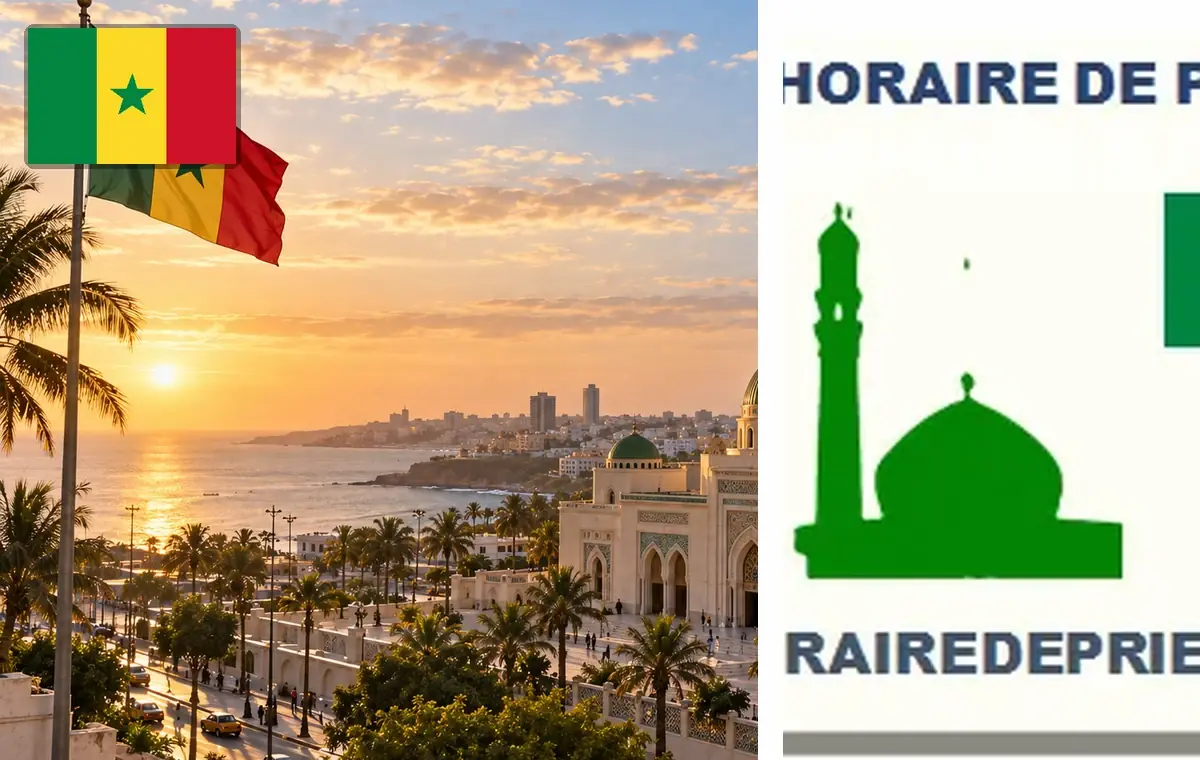
In Dakar, prayer times mark the five daily Muslim prayers, set by the sun's path across the sky: Fajr at dawn, Dhuhr after the zenith, Asr in the afternoon, Maghrib at sunset and Isha once night has fallen. The Senegalese capital sits at the tip of the Cap-Vert peninsula, where the sun sets over the Atlantic Ocean. Lying in the tropics and on Greenwich time all year, the city sees the length of the day change only slightly, so the shift in schedule from one season to the next stays gentle.
Dakar on the Cap-Vert Peninsula
Dakar occupies the western tip of the Cap-Vert peninsula, the westernmost point of mainland Africa. The ocean surrounds the city on three sides, and sunset arrives later than in the east of Senegal, even though both share one time zone. For worshippers this means a slightly later Maghrib and Isha than inland. The open horizon along the coastal road makes the evening twilight easy to watch, while sea breezes soften the heat of the afternoon around Asr.
Seasons and daylight near the tropics
Close to the fourteenth parallel north, Dakar sees little change in daylight, which runs from a little over eleven hours in winter to nearly thirteen in summer. Senegal does not move its clocks, so the schedule drifts by only a few minutes from one week to the next. The cool, windy dry season gives way to the rainy season from July to October, bringing humidity and showers. In the dry months, dust carried by the harmattan can haze the sky in the late afternoon.
Brotherhoods and mosques in the capital
Sufi brotherhoods shape religious life in the Senegalese capital: Mourides, Tijanis, Layenes and Qadiris all gather followers from across the country. The Grand Mosque in the Medina district and the Mosque of the Divinity, built facing the sea at Ouakam, are among the best-known places of prayer. On Fridays, the streets around neighbourhood mosques fill with worshippers. Large annual gatherings such as the Grand Magal of Touba and the Gamou of Tivaouane also draw many residents who travel out of the city.
Ramadan and Tabaski in Dakar
During Ramadan, the city adjusts to the rhythm of fasting. The ndogou, the meal that breaks the fast, brings families and neighbours together at sunset, often with dates, porridge and spiced Touba coffee. Markets bustle in the late afternoon, then traffic eases as Maghrib approaches. Korité closes the month, and Tabaski, the sheep festival, mobilises the whole agglomeration: animals are sold in open squares, then the Eid prayer takes place in the morning in mosques and on large open grounds.
Dakar prayer times: Frequently asked questions
Do prayer times change much through the year in Dakar?
Only a little. The city lies near the fourteenth parallel and Senegal keeps its clocks fixed, so the shift is a few minutes per week and daylight varies by roughly an hour and a half between seasons.
What are the five daily prayers in Dakar?
Fajr at dawn, Dhuhr around midday, Asr in the afternoon, Maghrib just after sunset and Isha at night. Each one follows the position of the sun above the Atlantic coast.
Does Senegal switch to daylight saving time?
No. Senegal stays on Greenwich time all year without a summer change, so the schedule in Dakar moves only with the sun, with no sudden jump in spring or autumn.
Further reading
- IslamicFinder : Dakar city page listing the five daily prayer times; the page is in English.