
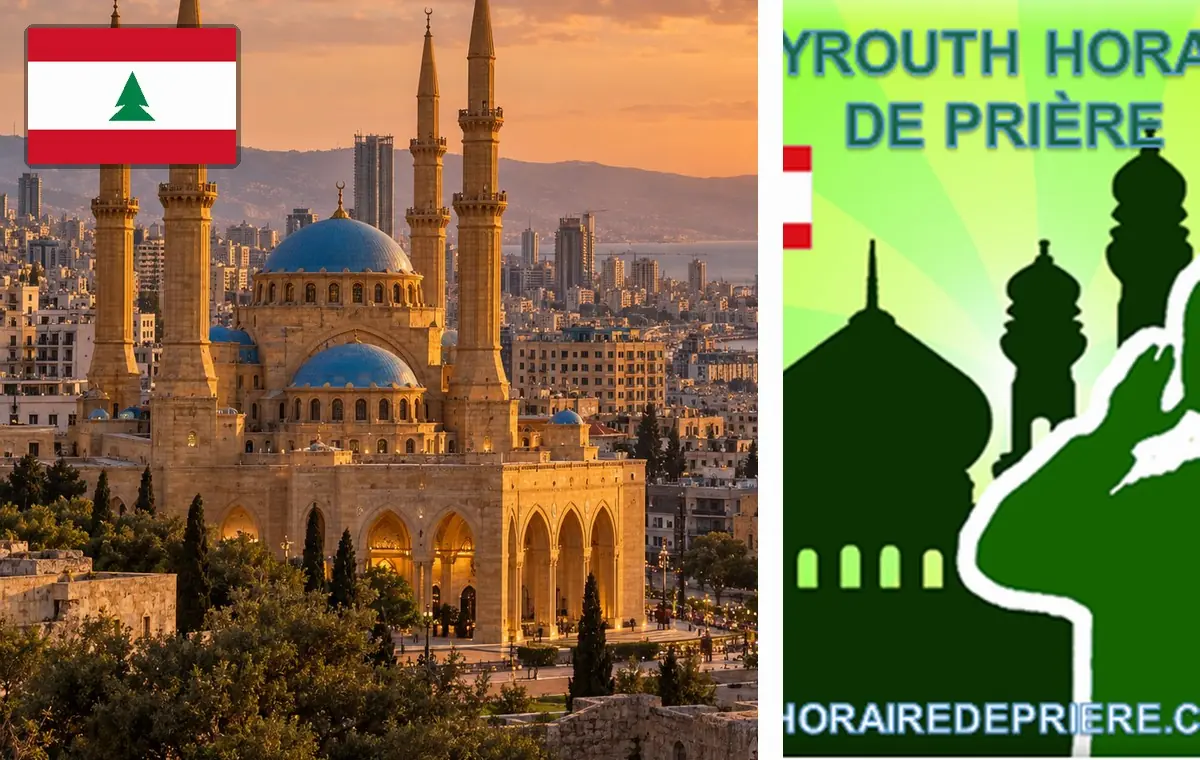
In Beirut, prayer times mark the moments when Muslims perform the five daily prayers: Fajr, Dhuhr, Asr, Maghrib and Isha. They are worked out from the sun's position in the sky, which is why they shift slightly from one day to the next. The Lebanese capital sits on a peninsula jutting into the Mediterranean, so its western horizon is open and sunset over the water clearly signals Maghrib. Mosques and churches stand side by side across its districts, and the call to prayer blends into the sound of a dense, cosmopolitan city.
Beirut's latitude and the changing seasons
Beirut lies around the thirty-fourth parallel north, so days are longer in summer and shorter in winter, yet the gap is far smaller than in northern Europe. Fajr comes early in the warm months, darkness arrives sooner in the cool months, and Isha follows Maghrib after a fairly steady interval. That stability helps people who work in the city and move constantly between neighbourhoods, offices and home. Anyone planning a day around the five prayers therefore only needs to adjust slightly from season to season.
A Mediterranean coast and its weather
The climate brings hot, humid summers and mild, rainy winters. Along the seafront the horizon is clear enough to watch the sun go down, the traditional marker for Maghrib. In winter, storms and thick cloud can hide the sky for days, so a calculated schedule is more dependable than direct observation. In summer, the midday heat leads many residents to look for shade and the cool interior of a mosque for Dhuhr. Sea breezes in the evening make the hour after sunset a favourite time to be outdoors.
Religious life in the Lebanese capital
Beirut is a mixed city where Sunni and Shia Muslims live alongside several Christian communities. The Mohammad Al-Amin Mosque, with its blue domes in the heart of downtown, is among the most visible places of worship in the capital. Smaller neighbourhood mosques mark the rhythm of the day with the call to prayer. On Fridays the congregational Jumu'a prayer takes the place of Dhuhr and draws large crowds. Visitors often notice how religious buildings of different faiths share the same streets.
Ramadan and Eid in Beirut
During Ramadan, Fajr sets the start of the fast and Maghrib its end at iftar. In the capital the evenings come alive with family tables, sweets, lit-up streets and cafés that stay open late. Eid al-Fitr and Eid al-Adha are official holidays in Lebanon, celebrated with visits to relatives, shared meals and a congregational prayer early in the morning in mosques and public squares. Many families gather for a late meal known as suhoor before the next Fajr.
Beirut prayer times: Frequently asked questions
Why do prayer times change every day in Beirut?
The five prayers are tied to the sun's path across the sky. Its height and its rising and setting moments shift a little each day, and the city's schedule follows that movement.
How can I spot Maghrib from the Beirut seafront?
Maghrib begins at sunset. From the corniche the sea horizon is open, so you can watch the sun disappear, but the calculated schedule for the city remains the safest reference.
Does the Friday prayer replace Dhuhr in Beirut?
Yes. On Fridays the congregational Jumu'a prayer is held around midday in the city's mosques in place of the usual Dhuhr, preceded by a sermon that the congregation listens to.
Further reading
- IslamicFinder : IslamicFinder's English-language page with today's prayer times for Beirut and the Qibla direction.