
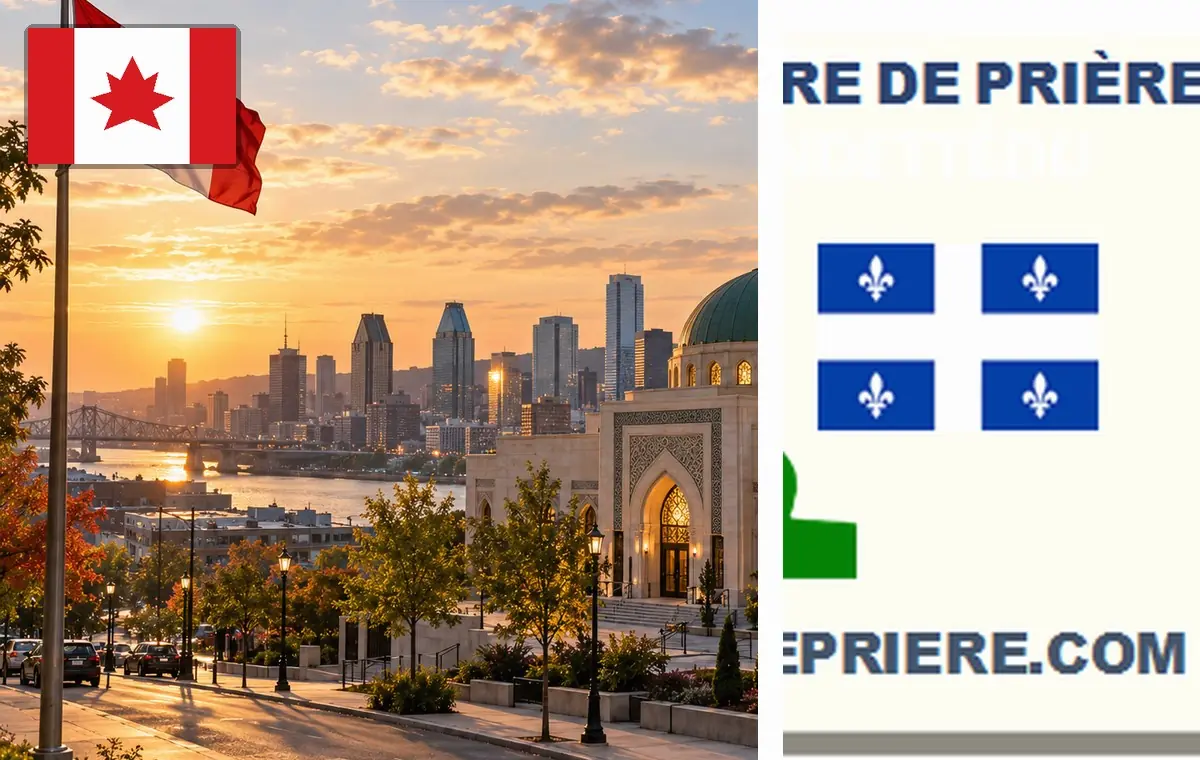
In Montreal, prayer times follow the five daily Muslim prayers, Fajr, Dhuhr, Asr, Maghrib and Isha, whose moments depend on the position of the sun above the city. Built on an island in the Saint Lawrence River at roughly forty-five degrees north, Montreal has very short days in winter and very long ones in summer. The city keeps Eastern time and moves to daylight saving time every year, which shifts everyday landmarks for worshippers. This largely French-speaking metropolis is home to a large and varied Muslim community.
Montreal's northern latitude and sharp seasons
Montreal's latitude makes the length of the day swing widely. In winter the sun rises late and sets early, so Dhuhr, Asr and Maghrib sit close together in the afternoon and many working days end after dark. In summer the sun stays above the horizon for a long stretch, Fajr arrives very early and Isha comes late in the evening. The seasons in between bring quick change from one week to the next, something residents notice most in spring and autumn.
Time zone and daylight saving in Montreal
Montreal follows the Eastern time zone of North America. Moving to daylight saving time in spring and back to standard time in autumn shifts every landmark of the day by one hour, prayers included. For a worshipper who travels, or who hosts relatives from Europe or North Africa, the gap with those regions therefore changes during the year. It is wiser to check the moments of the day than to rely on a habit formed in a different season.
Religious life and Muslim communities in Montreal
Muslims in Montreal come from North Africa, Lebanon, the wider Middle East, sub-Saharan Africa, South Asia and elsewhere, and many speak French at home. Mosques and community centres are spread across several boroughs and the neighbouring towns on the island. Students at the city's large universities and office workers downtown fit their prayers between classes and meetings, sometimes in quiet rooms made available to them. Friday gatherings give the week its rhythm for many families.
Ramadan and Eid in the Quebec metropolis
The length of the fast in Montreal depends on the season in which Ramadan falls: short when it comes in winter, much longer when it falls in summer. Families gather to break the fast at home or in community halls, and the night prayer draws many worshippers. For Eid, some communities hire large venues so that everyone can attend, and several neighbourhoods take on a festive mood as friends and relatives visit one another.
Montreal prayer times: Frequently asked questions
Why do prayers come closer together in winter in Montreal?
Winter days are short at this latitude. The sun sets early, so Dhuhr, Asr and Maghrib follow one another at a small interval, while summer prayers are spread much further apart.
Does Montreal change its clocks during the year?
Yes, the city moves to daylight saving time in spring and returns to standard time in autumn. Each prayer then shifts by one hour on the clock compared with the sun.
Can I pray at work or at school in Montreal?
Many people pray between activities, in a quiet room or a reflection space where one exists. It helps to talk about it in advance with the employer or the institution.
Further reading
- IslamicFinder : Daily prayer times for Montreal with the qibla direction and a monthly calendar, on a page written in English.