
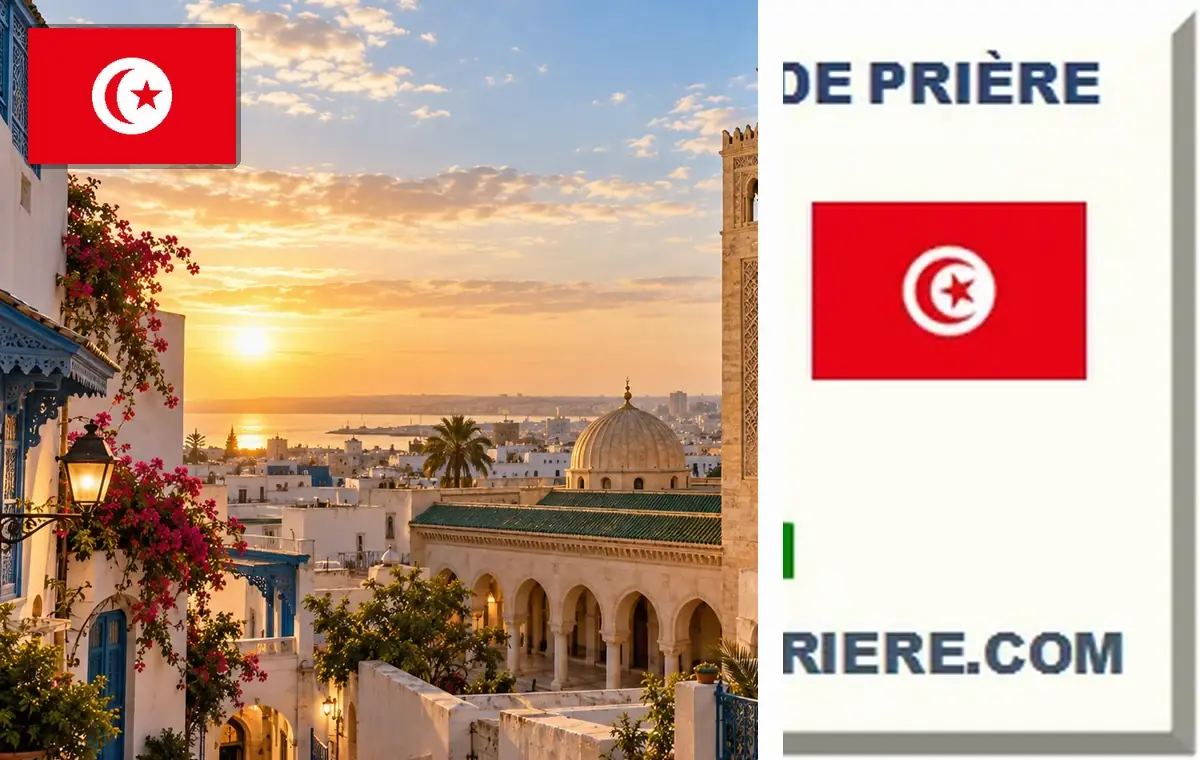
In Sousse, prayer times set the moments for the five daily prayers, Fajr, Dhuhr, Asr, Maghrib and Isha, calculated from the sun's position above Tunisia's eastern coast. Standing on the Gulf of Hammamet, the city enjoys an open horizon toward the sea, where dawn and sunset are easy to follow. Its Mediterranean latitude brings steadier days than northern Europe, and the country keeps the same clock all year round, without any summer adjustment. Day length there swings between about ten and fourteen hours over the year.
Sousse, pearl of the Tunisian Sahel
A major coastal city, Sousse lies between the sea and the olive groves of the Sahel, roughly one hundred and forty kilometres south of Tunis. The Mediterranean softens the summers, yet July days remain long, with a late Maghrib in the evening. Winter brings a shorter day, though never the dramatic swings seen in northern countries, and the afternoon prayers follow one another at a fairly steady pace through the year.
A time zone with no clock change
Tunisia stays on UTC+1 all year and no longer moves to summer time. Prayer times therefore drift only with the seasons: Fajr arrives early in June, while Maghrib slips toward the end of the afternoon in December. This stability simplifies daily life for residents and visitors alike, since habits formed in one season return unchanged the following year, with no clock shift in spring or autumn. Visitors on holiday find the schedule easy to keep.
The Great Mosque and the medina of Sousse
The medina of Sousse, a UNESCO World Heritage site, shelters the Great Mosque, built in the ninth century under the Aghlabid dynasty, along with the neighbouring ribat, a former fortified monastery crowned by a watchtower. The call to prayer echoes between ramparts, alleys and souks. The city is also a large university and commercial centre, where the rhythm of prayer blends with that of shops, schools and the port. Both stand within a short walk of each other.
Ramadan and Eid in Sousse
During Ramadan the streets of Sousse empty before iftar, then fill with families gathering around soup, brik and pastries. Cafés and shops in the medina stay open late into the evening, and many worshippers attend the night prayers at the mosque. For Eid, relatives visit one another and some travel to Kairouan, a holy city about an hour away by road. Pastries and sweet mint tea close most evenings, and the mood stays festive until well after midnight.
Sousse prayer times: Frequently asked questions
How do prayer times in Sousse change between winter and summer?
Tunisia keeps the same clock all year, so only the sun's path matters: summer brings an earlier Fajr and a later Maghrib, winter does the reverse, with almost five hours of difference in day length.
Which mosque is best known in Sousse?
The Great Mosque in the heart of the medina dates to the ninth century. Its plain architecture recalls the Aghlabid era, and it stands very close to the ribat, another major monument of the city.
How is Ramadan organised in Sousse?
Streets empty before iftar and then fill again. Cafés and medina shops open late, and many families go to the mosque for the night prayers that follow the evening meal.
Further reading
- IslamicFinder : English-language IslamicFinder page with today's prayer times in Sousse.